Showing posts with label process plates. Show all posts

11.22.2024

Wizards Beyond Waverly Place school plates

The first half of season 1 of Wizards Beyond Waverly Place has dropped on Disney and Disney+ and I shot all the school exterior establishing shots. Sometimes we'll have a producer with us, but this one was off on our own, so I ended up figuring out a lot of the shots and directing the actors. Not that building exteriors are overly complex. We shot day, dusk and night shots just in case the main unit had any school scenes that take place at other times, but so far all of them have just been daytime.

We shot this on the RED Gemini, which is great for when night started to fall and we had super limited lighting options to light up an entire school building facade. For the daytime, we used an Angénieux Optimo 24-290 zoom for ease of focal length changes, but switched to Zeiss Super Speeds and Sigma Art Cine Primes for night due to their much faster T-stop. Nighttime lighting was primarily done with Aputure/Amaran LED sources since we had limited power and crew. Daytime lighting was provided courtesy of the giant nuclear furnace in the sky through a nice soft diffusion of airborne H2O.


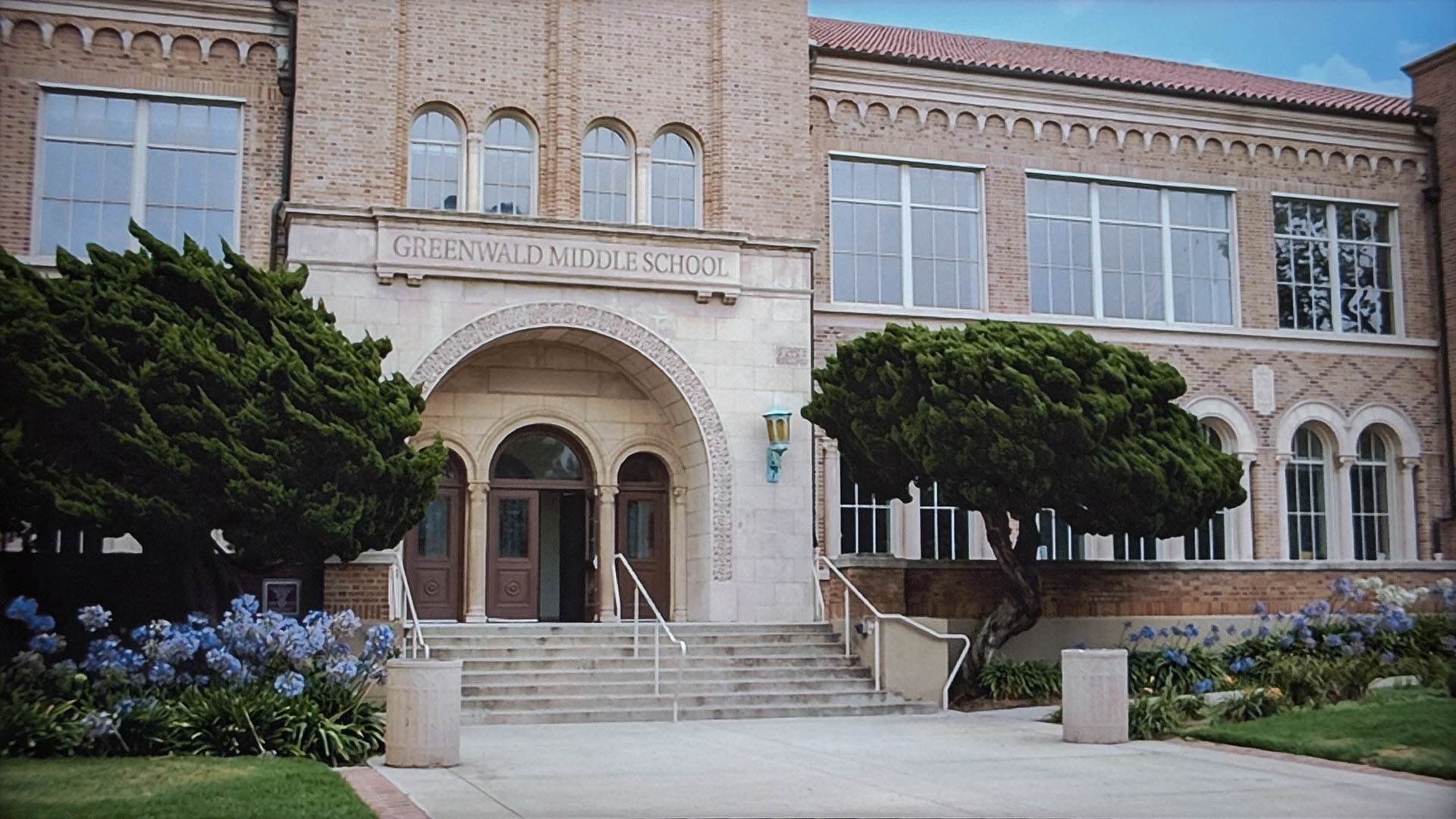
Part way thorough the shoot day, they asked me to find additional building shots that we hadn't approved ahead of time. I sent them the above shot from my phone as a potential angle/location, got approval, and then matched the shot with our RED. 


Here it is in the show. I think we lined it up really close to the reference I had sent them earlier.

It's always interesting to see how many different establishing shots I shoot and then how many and which ones they choose to use in the show. I try to make sure I get plenty of coverage for all sorts of scenarios, times, and shot variety so they always have the option to change things up a bit in future seasons as well.

3.19.2024

Call Me Kat plates

Worked a couple jobs recently for Call Me Kat. One was some driving plates at night. Single camera (RED Gemini for it's great low light and high ISO abilities) using the Sigma 14mm on a Ronin 2. Pretty much the go-to setup for our driving shots. The other shoots was a bit different, as they wanted some ~180° plates (from a tripod). For this we used 3 RED Komodos, with the outer cameras positioned 45° off of the center camera. Again, we utilized the Sigma 14mm for its wide field of view. This gave us good overlap between the cameras while also seeing a lot of real estate.

To trigger all three cameras at the same time, I utilized the Tilta Nucleus, with each motor (1 per camera with a run/stop cable) set to the same channel so all three would trigger off of a single hand unit. Normally I would also mount the motor to be functional on the camera (controlling the iris so all three would match), but due to not having a prep and how the cameras had to be mounted, we had to remove the iris rods to make the cameras fit on the plate, so the motors couldn't be mounted to control iris or focus. I thought that might be the case beforehand, but wasn't worried since all the cameras were easily accessible and I could set the iris and focus by hand.

I do enjoy doing some of these less common rigs. Like I said, we didn't have a prep but I planned ahead of time to make it work with as few hitches as possible and except for not being able to mount iris rods, everything worked as expected, though there were some paper-thin clearances between cameras! I have a few ideas for next time to make things even more efficient and simple, so hopefully more of these camera array jobs come up!

Setting up for night driving plates.

Triple Komodo array with cameras set to 45° increments.

7.15.2022

Westworld season 4

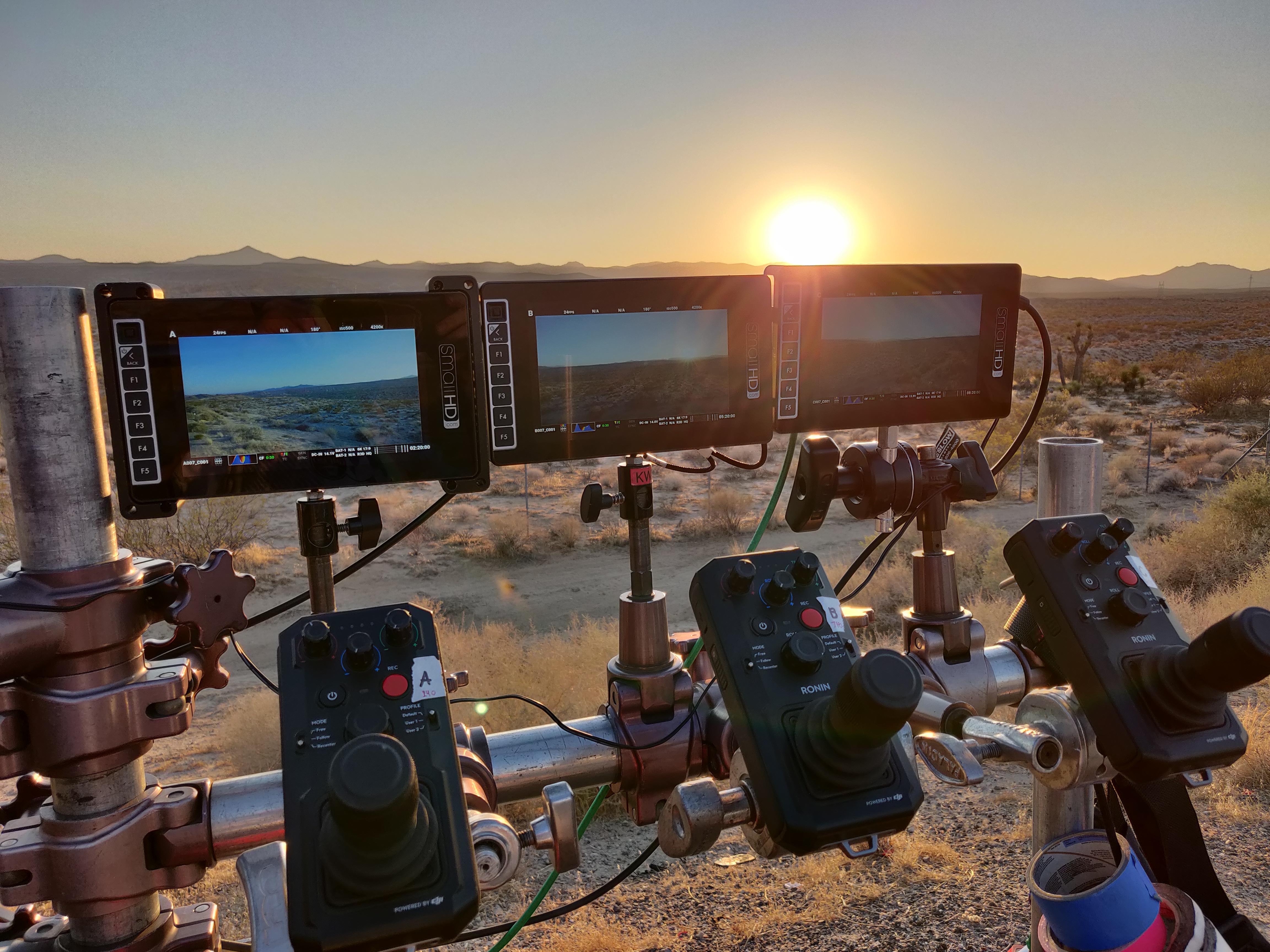
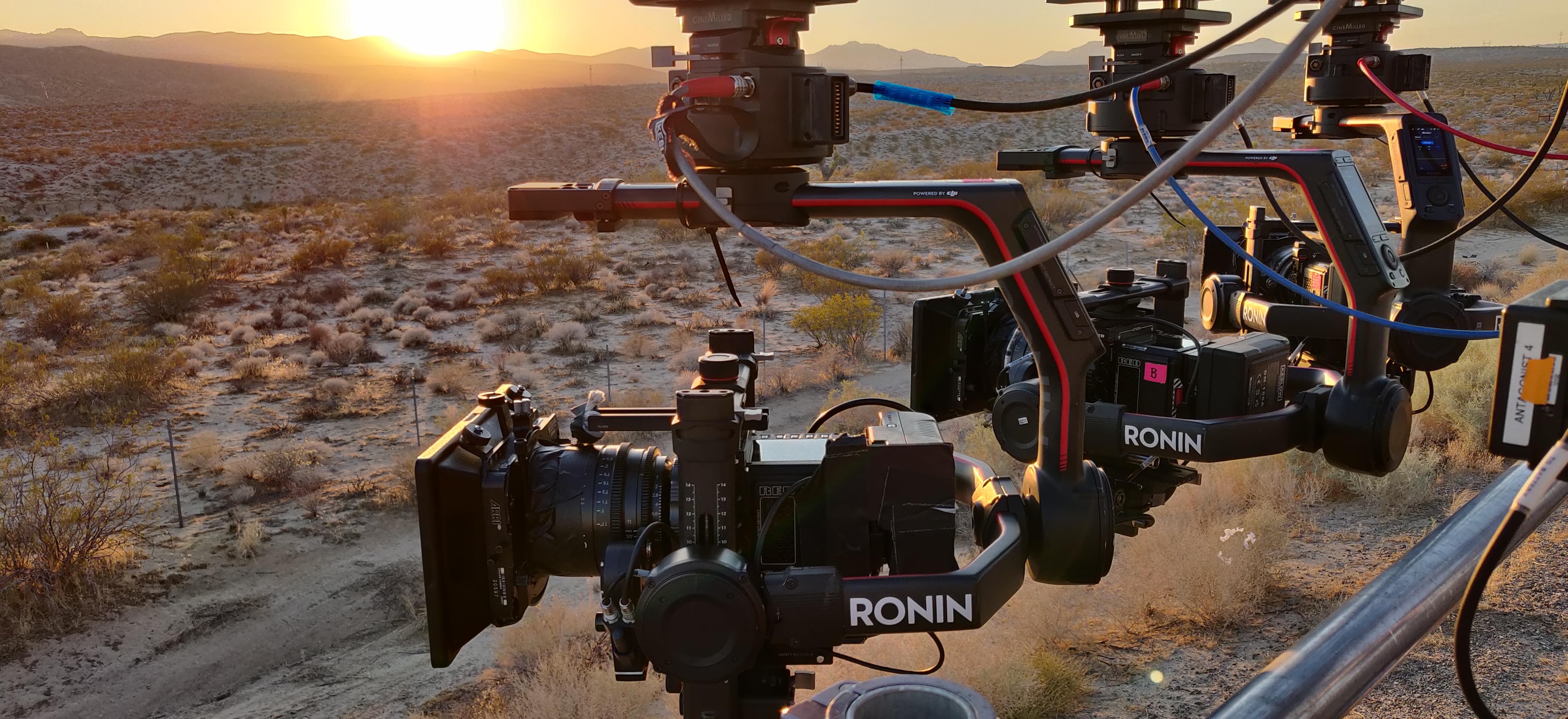
I can't believe it was just over a year ago that we were out shooting plates for Westworld. For the new season, they knew they would have scenes on a train and that the train car would be a standing set. Rather than shoot green screen and composite in later, they had us shoot the train plates ahead of time so they could do LED walls for interactive lighting.

Seeing as how they would be train height and potentially see out of multiple windows on any given side of the train car, we shot with 3 RED Komodos on Ronins (for smoothness) with 14mm Sigma Art primes, which would cover a 180° field of view with enough overlap to stitch the cameras together. These were all built on a truck at train window height with the run/stop synchronized via a Tilta Nucleus. By setting the Nucleus motor on each camera to the same channel, a single handset could control the iris (which we wanted to match between cameras) and run/stop on all three units.


We shot a few locations for the show, some in the desert, some on the freeway between Glendale and Eagle Rock, and a bit near downtown.


We did discover that the Komodos don't like having their exhaust vent facing upwind, as the incoming air would fight against the fan blowing the opposite direction and create a sort of air-pressure stalemate, causing them to overheat quickly. We solved the issue by taking a small piece of foam board, folding it into a "V", and taping the "tent" over the the exhaust port, effectively keeping the upwind air from pushing against the fan, but letting the hot air vent out the top and bottom of the tents. After that, we had no temperature issues at all.


I haven't seen all of the new season, so haven't found where the downtown footage we shot has been used yet, but we did the desert background plates for these shots:


As well as the arrival of the train to the city, shot on the 134 going up and down the hill between Glendale and Eagle Rock, as seen in these shots:


It was a pretty fun shoot and interesting in that we shot these before the main unit had even started filming the show, whereas I'm used to us shooting either concurrent with the main unit or, for a lot of the network TV shows that shoot their cars on green screen, well after they've shot their episode.


1.23.2021

The Glamorous World of Driving Plates!

The past couple years I developed my skills shooting driving plates. While I had done them before, I started doing a lot of shoots for several of Chuck Lorre's Warner Bros. television shows (Bob Hearts Abishola, Young Sheldon, Mom) along with occasional episodes of other television shows. If you aren't familiar with what driving plates are, here's the lowdown.

Often, on television shows that have driving scenes, those scenes are shot in a car on a greenscreen stage. This keeps the actors safe and also allows for a controlled environment, since the car isn't actually moving on the road. But since they need to look like they're driving, background plates of the moving street needs to be composited in behind them. So what happens is we get the edit of the driving scenes and we match the camera height, angle, and replicate any driving "movement" (such as swerves, pulling up to a curb, etc) so that the background can be properly matched to what they shot on the greenscreen. This takes us from city streets and freeways to suburban neighborhoods, parking garages, and even the drive thru. Whatever the story calls for, we shoot.

For most of our shoots, we use Jack Carpenter of Carpenter Camera Cars and rig up a RED Gemini on a DJI Ronin 2 with a FlowCine Black Arm. The Ronin keeps the camera stable and level while the Black Arm absorbs the larger side to side and up and down movement. The RED Gemini, with its dual gain sensor, allows us to shoot night driving plates on darker streets while keeping the sensor noise under control.

There are many options for lens choices, as each production calls for different parameters. The majority of my shoots want to shoot wide plates that they can then zoom in on and shift around the frame, giving them a lot of placement flexibility in post. For this, we generally use the Sigma Cine 14mm T2. We run a matte box at all times, during the day to be able to add ND filtration and block out sun flares, and at night just to reduce flares from street lights (so no ND). When we're not doing Gemini on the Ronin, we tend to also shoot Arri Alexa hard mounted to the truck, oftentimes with 2-3 cameras simultaneously. Again, depends on what the client asks for.

So maybe the world of driving plates isn't that glamorous after all, but it's an interesting part of the filmmaking process, one that most people don't even think about. I'm glad I've been able to develop this skill and enjoy the process and the wind blowing through my hair as we drive down the road (well, maybe I enjoy it a little less during the winter night shoots...😉). But the team we've put together to shoot these is all great and I love working with them.